20 FAMOUS PROPHESIES FROM THE ORACLES OF DELPHI
- Sienna Eve Benton
- Feb 16
- 10 min read

Updated: Mar 28
How Women of Ancient Greece Shaped Wars, Kings, and the Course of History
The Oracle of Delphi operated for approximately twelve centuries. Delphi stood at the spiritual and political center of the ancient Greek world. Rulers delayed wars, cities founded colonies, and ordinary people sought guidance by consulting a woman believed to speak with the voice of the god Apollo. Delphi was not simply a shrine. It was a living institution that shaped history, philosophy, and the ancient understanding of fate.
Delphi was considered the navel of the world. According to myth, Zeus released two eagles from opposite ends of the earth and they met at Delphi, marking it as the place where heaven and earth touched.
Know Thyself at the Gates of Delphi
At the entrance to the Temple of Apollo at Delphi was inscribed one of the most influential phrases in Western history. Know thyself. Every pilgrim who came seeking prophecy passed beneath these words before ever hearing the voice of the oracle.
The inscription served as both a warning and an instruction. It reminded visitors that divine knowledge did not exist to elevate human pride. To know oneself was to recognize one’s limits, one’s mortality, and one’s place within the greater order of the cosmos. Before asking the gods for answers, the seeker was required to confront their own nature.
Placed at the threshold of the temple, the inscription ensured that prophecy was never separated from introspection. The oracle offered insight, but it was the seeker’s self awareness that determined how that insight would be used.
In this way, Delphi taught that the deepest truth was not spoken by the god inside the temple, but by the understanding cultivated within the one who entered.
Who Was the Oracle of Delphi
Apollo was believed to reveal divine knowledge to humans through a priestess. This communication occurred through a woman known as the Pythia at the Temple. Rather than offering clear predictions, the oracle delivered symbolic and often ambiguous messages through riddles, speaking light language or “in tongues” that required interpretation by a priest of Apollo.

In the earliest centuries, there was only one oracle at a time, and she delivered prophecies nine days each year. Typically during the warm months, as Apollo often left Delphi during the winter months. As Delphi grew in importance during its height in the sixth through fourth
centuries BCE, demand increased so dramatically that two and sometimes three Pythias served simultaneously, rotating duties.
Ancient sources suggest that a Pythia typically served for many years, sometimes decades, until death or incapacity. Because the role was lifelong commitment after selection, turnover was slow.
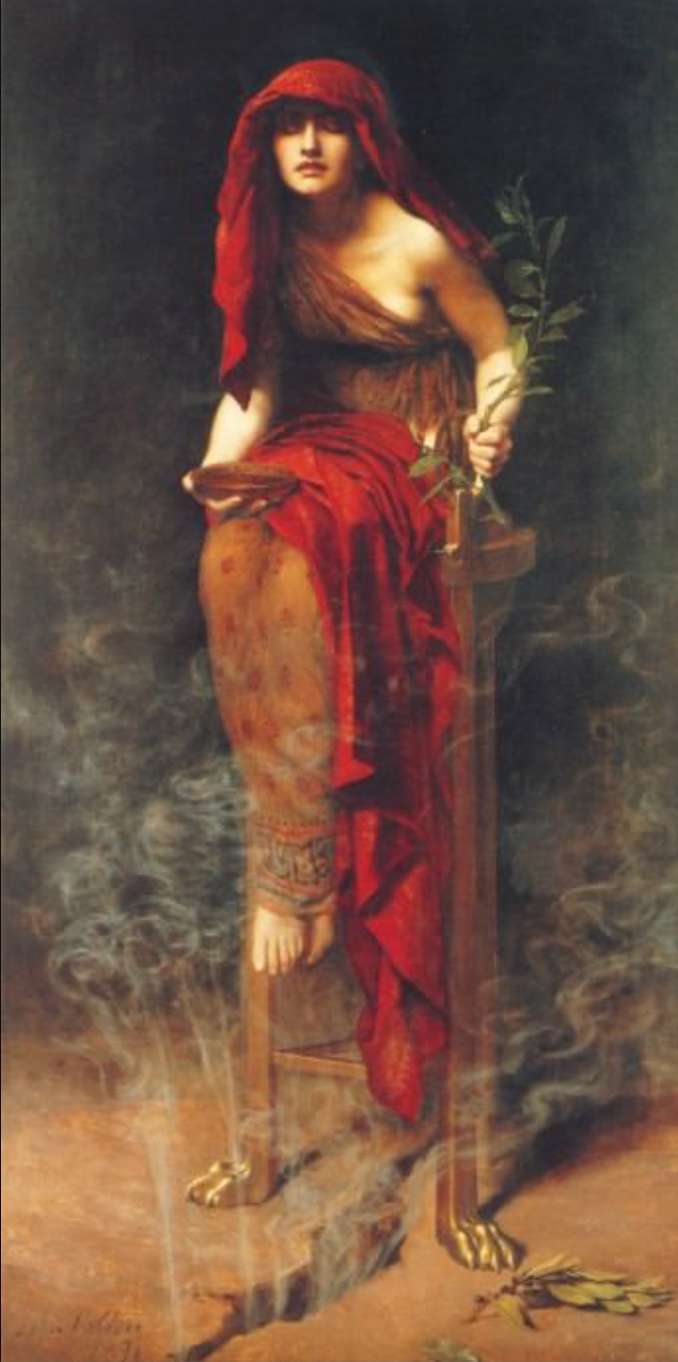
The Pythia was chosen from the local population and did not need noble birth or formal education. Her authority came from her role as a vessel for Apollo. Most Pythias were older women, often past childbearing age, which symbolized separation from ordinary domestic life. When delivering prophecy, she sat on a tripod within the innermost chamber of the temple and entered a trance state.

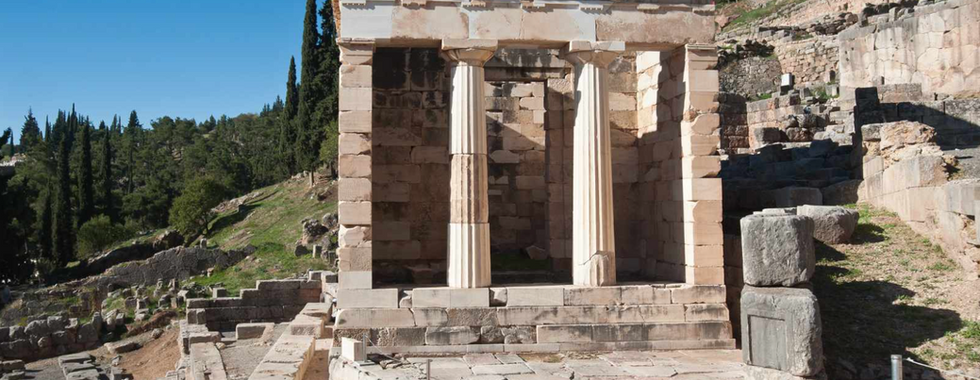



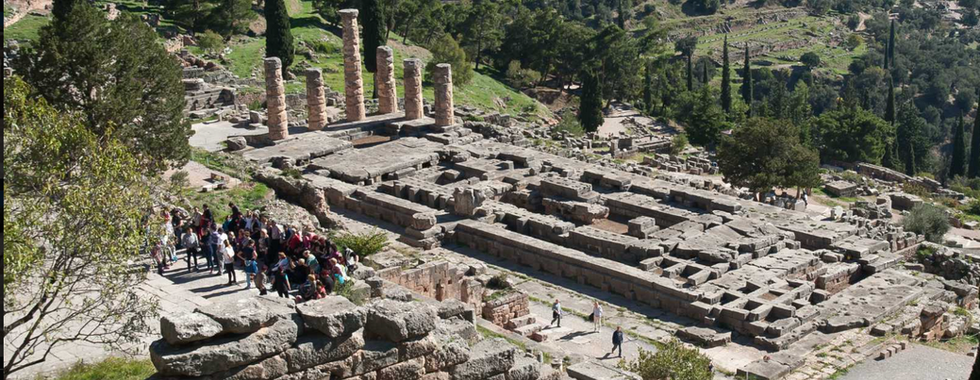


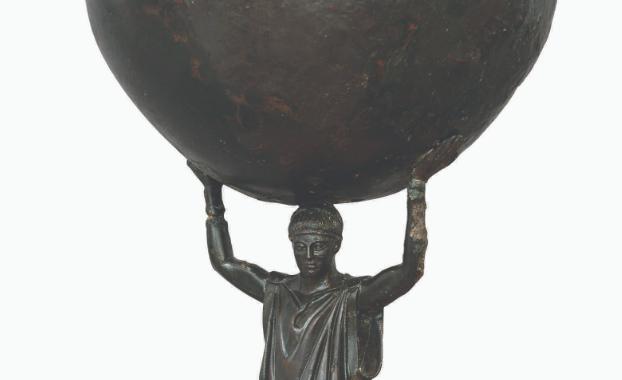


Images sourced from the Museum of Delphi Website via https://delphi.culture.gr/archaelogical-site/site-history/
Known Names of Oracles

SIBYL is said to have conducted prophesies while sitting on the Rock of Sibyl. Pausanias, Description of Greece Book 10 mention the Rock of Sibyl. As it states:
[10.12.1] XII. There is a rock rising up above the ground. On it, say the Delphians, there stood and chanted the oracles a woman, by name Herophile and surnamed Sibyl. The former Sibyl I find was as ancient as any; the Greeks say that she was a daughter of Zeus by Lamia, daughter of Poseidon, that she was the first woman to chant oracles, and that the name Sibyl was given her by the Libyans.
HEROPHILE is also said to have conducted prophesies while also sitting on the Rock of Sibyl. She came after Sibyl likely as a student of the earlier oracle. Pausanias, Description of Greece Book 10 states:
[10.12.2] Herophile was younger than she was, but nevertheless she too was clearly born before the Trojan war, as she foretold in her oracles that Helen would be brought up in Sparta to be the ruin of Asia and of Europe, and that for her sake the Greeks would capture Troy.
[10.12.3] These statements she made in her poetry when in a frenzy and possessed by the god. Elsewhere in her oracles she states that her mother was an immortal, one of the nymphs of Ida, while her father was a human.
These are the verses:–
I am by birth half mortal, half divine;
An immortal nymph was my mother, my father an eater of corn;
On my mother's side of Idaean birth, but my fatherland was red Marpessus, sacred to the Mother, and the river Aidoneus.
The Delphic Sibyl, pre-dates the official Pythia (Oracles) of Apollo and gave prophesies before the temple was officially built. The Sibyl, Herophile, and other Pythia sat on the rock to deliver their prophecies where they made predictions and likely served as mentors to the next generation of Sibylla.

PHEMONOE is traditionally considered one of the first, or earlier Pythia established in the eighth century BCE at Delphi. Pausanias, Description of Greece 10.5.7 states, “I have heard too that shepherds feeding their flocks came upon the oracle… The most prevalent view, however, is that Phemonoe was the first prophetess of the god, and first sang in hexameter verse.”
Phemonoe is credited with composing the earliest hexameter verses of the oracle:
At close quarters a grievous arrow shall Apollo shoot
At the spoiler of Parnassus; and of his blood-guilt
The Cretans shall cleanse his hands; but the renown shall never die."
This passage refers to the time when a dragon or serpent was placed by Earth to guard the oracle.
THEMISTOCLEA is said to have instructed Pythagoras in virtue and early philosophy, and some classical authors identify her as a Pythia. Her connection to Pythagoras highlights the Pythia’s potential influence beyond prophecy, extending into moral and intellectual guidance.
Diogenes Laërtius, Lives and Opinions of Eminent Philosophers (3rd century CE) Book VIII contains a passage about Pythagoras that quotes Aristoxenus (a 4th‑century BCE writer). In that passage, Diogenes Laërtius reports that:
"Aristoxenus says that Pythagoras got most of his moral doctrines from the Delphic Priestess Themistoclea."

How the Oracle Functioned
Consulting the oracle followed a formal ritual process over a period of 9 days during the summer months.
Petitioners and kings traveled to Delphi, often from distant regions.
They were required purify themselves in the Castalian Spring before entering.
A sacrifice was offered to Apollo like an animal or food.
Favorable signs were confirmed.
The Pythia entered the inner chamber and invoked Apollo.
Her utterances were interpreted by priests and delivered as prophecy.
The answers were rarely direct, often being riddles. Their meaning depended on the wisdom and choices of the listener based on how well they knew themselves.
Some times the priests would also listen in on conversations between kings and leaders while visiting Delphi. The priests would learn of political strategies from all over the world. They used this information as a way to help create predications based off the oracle’s trance.
Historians documented the results of the prophesies further enforcing the oracles credibility.
Famous Prophesies
1. The Fall of Troy
Approximate date: Mythic period traditionally placed before 1200 BCE
Early Greek legends report that the Sibyl of Delphi, Herophile , foretold the eventual fall of Troy while sitting on the Rock of Sibyl. The prophecy warned that the city would suffer destruction due to the expedition of the Greek armies, with great loss of life and the collapse of its walls. Though cryptic and poetic, this pronouncement became part of the oral tradition surrounding the Trojan War, influencing later epic narratives.
2. King Croesus of Lydia
Approximate date: 547 BCE
Croesus asked the oracle whether he should wage war against the Persian Empire ruled by Cyrus the Great. The oracle responded that if Croesus crossed the Halys River, a great empire would fall. Encouraged by this answer, Croesus attacked Persia. His own empire was destroyed instead. The prophecy was technically correct, but fatally misinterpreted because he did not “know thyself.”
3. The Wooden Walls of Athens
Approximate date: 480 BCE
Facing invasion by Xerxes’ Persian army, Athenians consulted Delphi. The oracle declared that only wooden walls would save the city. General Themistocles interpreted this as referring to ships. Athens evacuated its population and defeated Persia at sea at the Battle of Salamis.
4. Socrates of Athens
Approximate date: Around 430 BCE
A friend of Socrates asked whether any man was wiser than Socrates. The oracle, (most likely the oracle after Themistoclea) replied that no man was wiser. Socrates understood this to mean true wisdom comes from recognizing one’s own ignorance. The more you know, the more you learn you know nothing. This insight became the foundation of his philosophy and guided his life.
5. Battus and the Founding of Cyrene
Approximate date: Seventh century BCE
Battus consulted the oracle about establishing a colony. He was instructed to settle in Libya. After initial difficulties, he founded Cyrene, which became a wealthy and influential Greek city.
6. Themistocles of Athens
Approximate date: 483 BCE
Themistocles consulted Delphi about a newly discovered vein of silver at Laurium. The oracle advised that the wealth be used for defense. He built a fleet rather than distributing the silver, which proved decisive in later victories against Persia.
7. Croesus’ Son Atys
Approximate date: Mid-sixth century BCE
The oracle warned Croesus that he would lose a beloved son. To prevent this, Croesus kept Atys away from armed combat, restricted him from hunting dangerous game, and even employed bodyguards to accompany him during outdoor activities. He also staged mock hunts with hired substitutes to divert Atys from risk. Despite these extensive precautions, a series of unforeseen events led Atys to participate in an actual boar hunt, where he was accidentally killed, fulfilling the prophecy.
8. The Battle of Marathon
Approximate date: 490 BCE
Before the Persian invasion, the Athenians sent envoys to Delphi seeking guidance on whether to engage the vastly superior Persian army. The oracle encouraged them to fight, emphasizing courage and unity. Acting on this advice, the Athenians coordinated with their Plataean allies, executed a strategic surprise attack, and decisively defeated the Persians at Marathon. This victory not only preserved Athenian independence but also demonstrated the influence of Delphi’s counsel in shaping military and political outcomes.
9. Delphi’s Sacred Site
Approximate date: Eighth century BCE
Early Greeks consulted Delphi about where to establish a central sanctuary. The oracle instructed them to place the omphalos stone and build the temple, making Delphi a spiritual and political center.
10. The Persian Defeat at Plataea
Approximate date: 479 BCE
Before the Battle of Plataea, Greek city-states consulted Delphi. The oracle predicted victory if they acted in unity. The Greeks followed this counsel and defeated the Persian army.
11. Stability of Athens’ Democracy
Approximate date: Fifth century BCE
Athenians asked the oracle about their government’s future. The Pythia advised moderation, respect for laws, and civic engagement, influencing reforms that balanced power and promoted civic responsibility.
12. The Oracle’s Warning About Plundering Sacred Treasures
Approximate date: Fifth century BCE
The Pythia warned that Delphi’s offerings and treasures should not be taken by force. Later events, including the Phocian sack, fulfilled this prophecy.
13. The Colony of Thurii
Approximate date: Fifth century BCE
Greek settlers founding Thurii in southern Italy consulted Delphi. The oracle instructed them to select just and virtuous leaders. Following this advice, the colony thrived as a cosmopolitan hub.
14. Advice to Polycrates of Samos
Approximate date: 530 BCE
Polycrates consulted Delphi to secure his rule. The oracle praised his early successes but warned that extreme fortune could provoke his downfall. Polycrates ignored this and was eventually betrayed and executed.
15. The Oracle and the Sacred Games at Delphi
Approximate date: Sixth century BCE
City-states consulted the oracle about organizing the Pythian Games. The oracle advised on rituals, timing, and competitions, shaping the games into one of Greece’s most important cultural events.
16. Guidance to the Phocians
Approximate date: Fifth century BCE
Phocian leaders consulted Delphi regarding sacred lands. The oracle warned against exploiting the temple for personal gain. Ignoring this warning led to the Sacred War, fulfilling the oracle’s caution about hubris.
17. The Silence of Delphi
Approximate date: Fourth century CE
During the reign of Emperor Julian, the oracle was consulted about the future of the sanctuary at Delphi, which had experienced political decline under Roman rule. The Pythia reportedly declared that the sacred springs and prophetic voice would fall silent until the oracles returned, signaling a period in which divine guidance would no longer be manifest. Following this, the Castalian and Cassotis springs reportedly ran dry, and the sanctuary ceased to function as a center of prophecy. Recently, it has been reported the Castalian springs are running again, signaling the oracles have reincarnated and will find their way back to Delphi to bless them.
18. Alexander the Great
Approximate date: 335 BCE
Alexander visited Delphi to seek confirmation of his divine favor and legitimacy before launching campaigns in Asia. When the Pythia initially refused to prophesy, as it was not a prophesy day and against the temple’s customs. Alexander reportedly dragged her into the temple, and she proclaimed that he was invincible. This prophecy reinforced Alexander’s sense of destiny and divine approval, strengthening his authority among his troops and allies. He interpreted the pronouncement as validation for his campaigns and subsequently embarked on the conquest of the Persian Empire, achieving rapid and far-reaching success that historians later linked to both military skill and the psychological impact of the oracle’s declaration.
19. Nero and the Prophecy of 73
Approximate date: 67 CE
Emperor Nero consulted the oracle at Delphi. The Pythia gave a cryptic prophecy involving the number 73, which Nero interpreted as predicting his own lifespan. His presence and actions reportedly angered Apollo. In a violent response, Nero attacked the Pythia and burned part of the temple. He was overthrown before reaching 73, and his successor Galba was 73 years old, fulfilling the oracle’s number in an unexpected way.
20. Solon’s Guidance at Delphi
Approximate date: Circa 594 BCE
The Athenian lawgiver Solon consulted the Oracle of Delphi during a period of political and social unrest in Athens. The Pythia instructed him to “seat yourself now amidships, for you are the pilot of Athens,” urging balance, moderation, and careful governance rather than extreme measures. Solon interpreted this guidance as divine support for his legal and constitutional reforms, which eased class tensions and laid the foundation for the later development of Athenian democracy.


