WOMEN OF THE ILIAD - CHRYSEIS

Updated: Sep 4
Reconstructing Chryseis Through the Clues and Subtext with Emily Wilson’s Translation of Homer's Iliad
This article focuses on Chryseis, one of the Iliad's most conspicuously silent figures. In Wilson's translation, she is given no dialogue of her own, yet her captivity becomes the catalyst for the conflict between Agamemnon and Achilles and contributes to the larger tensions that define the opening of the epic.

Although it may be tempting to romanticize the dispute between Agamemnon and Achilles over Chryseis, and later Briseis, the text does not support an interpretation of genuine love or desire. Rather, these women are presented within the framework of war, possession, and labor/sex enslavement. Chryseis's role functions a prize of conquest rather than a mutual romantic partnership with Agamemnon.
Chryseis's story therefore differs from the more familiar narratives of Paris and Helen, or Paris and Oenone, whose relationships are at least partially framed through desire and affection. What remains for Chryseis is a fragmented portrait constructed almost entirely through the words, information, and actions of others. By examining these fragments, we can begin to piece together a more nuanced understanding of who she was and her psychology during her captivity.
THE ILIAD - BOOK 1 of 24
Quotes and Mentions of Chryseis - Emily Wilson's Translation
Book 1, Pg 1
“The priest had come towards the swift Greek ships, and faced the warriors bedecked in bronze to free his daughter with a countless ransom.” - Wilson
Book 1, Pg 2
“This proposal did not please the heart of Agamemnon, son of Atreus.”
“Be off with you, old man! You must not let me catch you lingering here beside our hollow ships a moment longer! And if you ever come back again, your staff and diadem will not protect you. I will not let her go. She shall grow old a very long way from her fatherland in Argos, in my house, and work the loom, and share my bed.” - Agamemnon
Book 1, Pg 5
“It is the priest whom Agamemnon scorned, who’s daughter he would not give back for ransom. That is the reason the archer god gives us troubles and will give yet more. He will not drive away the deadly plague that now afflicts the Greeks till Agamemnon returns the bright eyed woman to her father without a ransom or reward, and carries a hecatomb to Chryse. Then we may appease the god.” - Calchas
Book 1, Pg 5
“I want the girl Chryseis in my home. I like her more than my own Clytemnestra, my wife. You see she is no worse than her in figure, height, intelligence, or skill. But I am still prepared to give her back, if that is best. Now go find me another trophy, so I am not the only Greek commander who lacks a trophy. That would be unfair. You can all see my trophy going elsewhere.” - Agamemnon
Book 1, Pg 7
“But come now, let us drag the black ship down and launch it on the bright salt sea and gather a crew of rowers, and then tow aboard the hecatomb and beautiful Chryseis.” - Agamemnon
Book 1, Pg 7
“You don’t even care! And now you threaten to take away my trophy that I worked for, after the sons of Greece gave it to me. You always get a better one than mine when we sack any wealthy Trojan town.” - Achilles
Book 1, Pg 8
“But I swear this to you. Just as Apollo will take Chryseis back, away from me, I when I send her to him on my own ship, escorted by my very own companions, so I shall take your beautiful Briseis, your trophy. I myself will come and get her in person from your tent, so you will see how far superior I am to you.” - Agamemnon
Book 1, Pg 13
“And Agamemnon, son of Atreus, launched the swift ship to the sea, chose twenty rowers, and drove the cattle for the god on board, and led fresh-faced Chryseis to sit down. Artful Odysseus embarked as leader. - Wilson
Book 1, Pg 15
“You know! Why ask me this when you know everything? We went to these, sacked the holy town of Eëtion and looted everything. The sons of Greece divided up the spoils equitably, and gave fresh-faced Chryseis to Agamemnon, son of Atreus. By Chryses was the father of Chryseis - a priest of Lord Apollo, distant archer.” - Achilles
Book 1, Pg 15
“The old man was enrage. He left the Greeks and prayed to lord Apollo. Apollo heard his prayer - he loved the priest - and shot his fatal arrows at the Greeks.” - Achilles
Book 1, Pg 16
“The bright eyed Greeks are taking her by swift ship back to Chryse, with offerings for the god.” - Achilles
Book 1, Pg 17
“Meanwhile Odysseus had come to Chryse, bringing the hecatomb. When they had sailed inside the recesses of the harbor, they furled the sails and packed them in the the ship.” - Wilson
Book 1, Pg 18
“Chryseis also left the quick black ship. And then Odysseus, the mastermind of strategy, led her towards the alter, into her loving fathers arms and said, “Chryses, commander Agamemnon sent me to bring you your daughter, and to sacrifice a holy hecatomb on our behalf, to mollify Apollo, who has cast a terrible catastrophe upon us. He handed her into her father’s arms, who joyfully received his darling daughter.” - Odysseus
Book 1, Pg 18
“Silver bow, guardian of Chryse, lord of holy Cilla and of Tenedos, as once before you listed to my prayers, and honored me and overwhelmed the Greeks, so now, fulfill for me this new request. Drive off your deadly plague.” - Chryses
Book 1, Pg 19
“All day the young Greeks pacified the god with dancing and with singing lovely hymns to please Apollo.

What we learn about Chryseis
She’s mortal. Not nymph, demigod, or royal.
"Free his daughter” indicates she was taken as a slave when attacked by the Greeks or more acutely known as the Achaeans or Ἀχαιοί, Achaioi. (“Greece” was not technically a country during the time of the Trojan war, but a land made of multiple independent kingdoms).
Her father, Chryses, was a priest of Apollo and tried to pay a ransom to free her. This means she was loved and not disregarded by her family due to her gender. Likely grew up in a healthy family for that time.
She was likely to become a priestess of Apollo, or be married off to secure alliances between priestly lineages, wealthy merchant houses, or local governors.
“and share my bed,” indicates she was not just taken as a labor slave but also a concubine to Agamemnon after a battle in one of the nearby Trojan towns Thebe Hypoplakia. Thebe was a city in the Troad, near Mount Plakos ruled by king Eëtion. Approximate Latitude: 39.597400 and Longitude: 27.020200
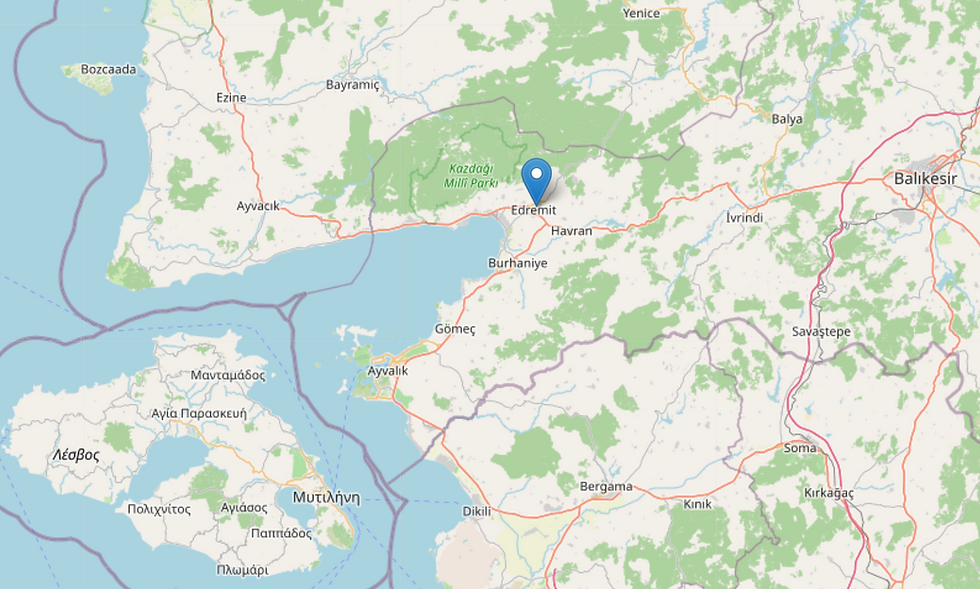
Modern day location of Thebe Hypoplakia. Locaton where Chryseis was taken by Agamemnon. Source “Bright eyed woman,” indicates that her eyes naturally caught or reflected light, creating a noticeable visual separation between the colored iris and the dark central pupil. It does not indicate her eye color.
“Returns the bright eyed woman to her father without a ransom or reward, and carries a hecatomb to Chryse,” indicates her father's home town of Chryse was close Thebe, where Agamemnon's army attacked and took Chryseis as a slave and concubine.
Because she is being retrieved by her father rather than her husband, it is likely that she was unmarried at this time.
There is no mention, or indirect mention of children by her. This could indicate that she was either too young to bear children or was of an age to conceive but had not yet married and therefore had not conceived during her captivity with Agamemnon.
-“I like her more than my own Clytemnestra,” indicates Agamemnon preferred her over his own wife.
Agamemnon preferred Chryseis to his own wife, but this does not indicate that he "loved" her. Rather, he likely viewed her as a trophy or prize of beauty, considering her equally, if not more, beautiful than Clytemnestra. Agamemnon and Chryseis do not share dialogue or behavior indicating "love," but primarily addresses her role as his prize and concubine.
“She is not worse than her in figure, height,” indicates that to learn more about Chryseis’s physical appearance, we can look to descriptions of Clytemnestra for clues that may help us understand Chryseis’s height and figure.
“She is not worse than her in figure, height, intelligence, or skill,” indicates that Chryseis was considered equally skilled and intelligent as Clytemnestra. Clytemnestra herself was highly capable, eventually murdering Agamemnon by luring him into the palace, trapping him in a net while he bathed, and striking him three times. In Aeschylus’ version, the weapon is traditionally understood as a sword or axe.
Chryseis may have used fawning as a survival response while captured. She likely appeared to accept her enslavement and went along with Agamemnon’s demands out of fear for her life, while internally refusing to accept her reality as a captive. Rather than openly resisting, she may have been patiently waiting for a safe and viable opportunity to escape.
“Beautiful Chryseis,” indicates that Agamemnon found Chryseis physically beautiful and did not want to give her up. His statement that he wanted her in his home and that she would “share my bed” indicates that he intended to have her as a sexual partner. It is therefore highly likely that he had sexually assaulted her by the time her father demanded her return, making Chryseis a victim of rape and sexual enslavement.
“You always get one better than mine,” could indicate that Chryseis was more beautiful than Achille’s trophy, Briseis. Given Chryseis was mortal and not of royal blood, this likely refers to beauty being more important to Achilles than rank.
“Beautiful Briseis,” indicates Briseis was also beautiful, but still not “better” than Chryseis. This indicates how important beauty was to men during this age, and also informative for casting directors during pre-production stages for filmmaking.
“Fresh faced Chryseis,” indicates she is young. Many girls were married by the age of 14 or 16, while men commonly married around the age of 30 during the bronze age. Spartan brides particularly, were most likely around 18, grooms around 25.
Chryseis is accompanied by Odysseus when she is returned to her father. Odysseus and Agamemnon worked closely together, making it likely that Chryseis would have known of “Odysseus’s trophy” (Book 1, pg. 6) while she was enslaved at the Greek camp.
"We went to these, sacked the holy town of Eëtion and looted everything. The sons of Greece divided up the spoils equitably, and gave fresh-faced Chryseis to Agamemnon, son of Atreus,” confirms the location of Chryseis when taken as a slave. Although her father is from Chryse, Chryseis was in the sacred town of Thebe Hypoplakia, a city in the Troad, near Mount Plakos. Eëtion was the ruler of Thebe and was also the father of Andromache, wife of Hector. Chryseis father was in a different town called Chryse.

Emily Wilson Journeys of Troy Map - Chryseis locations “We went to these, sacked the holy town of Eëtion and looted everything,” also confirms Chryseis was taken in a different town than Briseis. (Book 2 mentions Briseis is caputred in Lyrnessus).
There is a chance that Briseis, Chryseis, "Ajax’s trophy," and "Odysseus’s trophy" (Book 1, pg. 6) knew one another as fellow captives. They may have weaved, cleaned, served food and poured drinks for Agamemnon, Ajax, Achilles, and Odysseus during leadership meetings or dinners before Chryseis’s father demanded her return.
Chryseis is mentioned as “fresh-faced” twice.
“Apollo heard his prayer, he loved the priest,” indicates that Apollo’s relationship in this passage is with Chryses, not Chryseis. Despite her beauty and Apollo’s reputation for pursuing beautiful women, he responds to the mistreatment of Chryseis because of respect he has for his priest and loyal follower, Chryses. This further eliminates any romantic interpretation of a relationship between Apollo and Chryseis.
“Meanwhile Odysseus had come to Chryse,” indicates that Odysseus made the journey with Chryseis. It is likely that they exchanged words along the way, and it is possible that Odysseus also brought his “trophy” with him. This could mean that both women served as slaves during the journey, laboring for the men as they rowed back to Chryse. Since Chryseis could no longer be defiled without risking further offense to Apollo, this would leave “Odysseus’s trophy” as the only woman available to provide companionship in addition to labor. Most likely, this would have been exclusively for Odysseus, as sharing her with the other men would not support the pattern of behavior or character Homer establishes for Odysseus throughout the Trojan War and Odyssey.
-“Chryseis also left the quick black ship,” indicating that if Odysseus’s trophy accompanied them on the journey, Odysseus’s trophy would have remained on the ship, and said goodbye to her (likely) friend Chryseis.
“And then Odysseus, the mastermind of strategy, led her towards the alter, into her loving fathers arms and said, “Chryses, commander Agamemnon sent me to bring you your daughter,” indicating Odysseus personally returned Chryseis rather than sending one of the crew to do it for him. His actions may suggest a sense of responsibility and basic compassion toward her.
“He handed her into her father’s arms, who joyfully received his darling daughter,” indicates that Chryses was neither angry nor judgmental toward Chryseis upon her return. His immediate joy at having his daughter safely returned suggests that he cared more about her survival and wellbeing than any loss of sexual purity or honor, giving insight into Chryses’ character and how deeply he cherished his daughter.
“So now, fulfill for me this new request. Drive off your deadly plague,” indicates that Chryses was a man of integrity who kept his word and honored his relationship with Apollo. Chryseis was raised within this family and may have inherited the same values, including the belief that keeping one’s word is an important part of personal character and honor.
Homer gives Chryseis no dialogue. She is only mentioned through other characters.
She is never mentioned falling in love with anyone in the Iliad. Given the trauma of captivity and sexual violence, Chryseis may have been unlikely to pursue romantic relationships after returning home. Modern research shows that survivors of sexual violence have significantly higher rates of PTSD, anxiety, depression, avoidance, and other long term psychological effects, which could make intimacy and romantic attachment difficult. If Chryseis later married, it may have been through an arranged marriage rather than by her own romantic choice. Most likely she would have chosen a life devoted to religious service as a priestess. Given her father's love, support, and empathy, this could have provided an alternative to marriage and allowed her to remain unmarried and heal from her trauma.
She survives the Trojan war. There is no mention of her dying during battles. However she might have still assisted bringing trade goods to the Trojans and exchanged information about Agamemnon's camp with Trojan soldiers after being returned to her father.
Based on reviews and research of sexual violence survivors, the most likely psychiatric diagnoses for Chryseis would have been PTSD, depressive disorders, anxiety, with sleep disorders, possible eating disorders, or obsessive compulsive disorder. PTSD and depression appear particularly prevalent among survivors of sexual assault.
What did Chryseis look like?
Hollywood adaptations of the ancient world have not always prioritized historical or textual accuracy when developing their visual interpretations of mythological figures.
Academic research on historical cinema has repeatedly demonstrated the liberties filmmakers take with casting, appearance, costume, and cultural representation. With that in mind, I took the liberty of doing some of the homework for them. By examining Homer’s descriptions alongside the historical and cultural context surrounding Bronze Age Troy, I have constructed a proposed casting profile for Chryseis:
Name: Chryseis
Age: Approximately 18 to 25
Ethnicity/Appearance: Aegean or Anatolian Mediterranean
Build: Healthy, naturally feminine, well proportioned, with noticeable height and physical presence
Face: Youthful, fresh faced, naturally striking, with strong Mediterranean features
Eyes: Large, bright, expressive eyes; naturally reflective or light catching, with noticeable contrast between the iris and pupil
Hair: Dark, thick, naturally textured or softly wavy
Skin: Warm Mediterranean complexion
Tattoos/Markings: No modern tattoos or piercings; any markings should be historically appropriate to the Bronze Age setting
Presence: Graceful, intelligent, observant, quietly resilient
Role: Mortal young woman, daughter of Chryses, priest of Apollo
Character: Chryseis is intelligent, skilled, and naturally beautiful rather than overtly seductive. Raised in a loving religious household, she possesses quiet strength and adaptability. After being captured and sexually enslaved, she survives through observation and outward compliance while privately maintaining her identity and sense of self.


